

Mood Swing Is Not Just Hormone Anymore: New Data Shows Men and Women Equally at Risk
Never ignore your mood swings; they are not just hormonal ups and downs, but rather are serious neurological alarms. In recent studies, it has been found that mood swings are linked to neurotransmitter disturbances and brain inflammation.
The majority of the treatments start at later stages because of mislabeling the issue as just a hormonal imbalance. The results are utterly disappointing. Dr. charles Raison from Emory University School of Medicine said that “Mood disorders are increasingly being understood as neuroinflammatory conditions, where cytokine activity disrupts neurotransmitter balance.”
Similarly, Dr Nora Volkow, who is director of NIDA, stated that “Hormones may influence mood, but they are not the sole cause. Brain imaging shows structural and chemical changes in patients with mood instability.”
Men Experience Too, But Trained to Hide Them
Previously, it was perceived that mood swings only hit women. The logic given was that the monthly period cycle, physical relations, childbirth, and then menopause, are like ups and downs throughout a woman’s life.
However, recent studies show that men are also equally affected but are overridden. Their anger is often just masked as aggression, a dominant male trait.
According to Dr Michael Addis, “Men are taught to suppress emotional expression, which leads to internalized distress and delayed help-seeking.”
Dr Ronald Levant added that “Anger and withdrawal are often the male equivalents of depression, but they go unnoticed because they don’t fit the stereotype.”
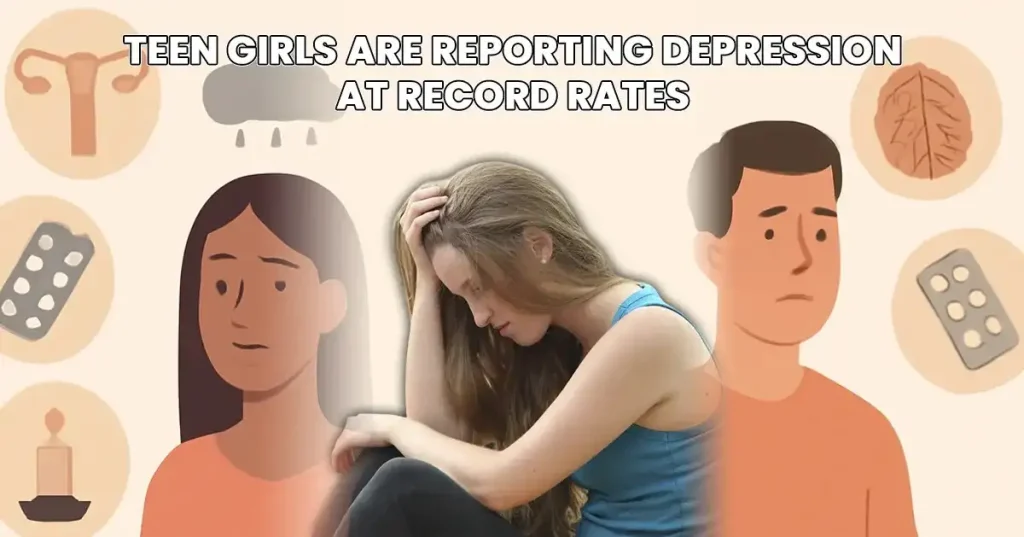
Teen Girls Are Reporting Depression at Record Rates
The issue is constantly rising, even in teenagers who suffer from it severely. Research shows that since 2010, emotional instability has doubled globally. Both academic depression and social media addictions are playing a key role in the mental collapse.
Severe anger is even normalising in teenage girls, although they are often considered soft-hearted and polite.
According to the CDC Youth Risk Behaviour Survey, 2023, “Nearly 3 in 5 (57%) U.S. teen girls felt persistently sad or hopeless in 2021, double that of boys.”
Ddr hean twenge, who is the author of ‘iGen’, stated that “Social media has created a pressure cooker of comparison, validation-seeking, and emotional volatility for young girls.”
Mood Swings Are Early Warning Signs
Dr Key Redifield Jamison from Johns Hopkins University said that “Mood swings are often prodromal symptoms of major psychiatric disorders, including bipolar and borderline personality disorder.”
Similarly, the National Institute of Mental Health report states that “Ignoring emotional instability can allow underlying conditions to progress unchecked, making treatment more difficult later.”
Early intervention is highly critical, but it can only be possible when people are aware that what they are suffering from is far beyond simple fluid functions.
The Gender Gap in Mental Health Is Growing
Dr Gemma Knowles, King’s College London, stated that “The average rate of change in depressive symptoms per year in London girls was around four times greater than among girls in Tokyo.”
Also from Harvard School, Dr Vikram Patel, stated that “Mental health systems are not equipped to address gender-specific expressions of distress, leading to underdiagnosis and mistreatment.”
Culture influences mental health too much. Boys living in asian countries may suffer 50% more than the girls in European countries because of social stigmas, likes, and dislikes.
Mental Health Is Not Gendered
As mental health is not linked to a specific gender, so our response shouldn’t be either. The treatments now should be real and practical, considering what is actually effective. We have to break those outdated stereotypes because mental health is more important than they are.
According to Dr Lisa Feldman Barrett, Northeastern University, “Gender stereotypes influence the perception of emotionality… the same face is perceived as more emotional when labelled female.”